
How to launder money (using crypto casinos)
Islands of corruption

No, I will not teach you anything illegal - how to actually launder money. Instead, I want to give you a tour around two beautiful islands, Curacao and Cyprus, and highlight some anti-money laundering concerns. Those small islands are causing international havoc by allowing barely legal structures to conceal real ownership of online crypto casinos and facilitating financial flows that, if flagged to financial authorities, could likely see the start of cross-border anti-money laundering enhanced investigations.
One of the most common structures I have seen is online casinos owned via trusts in Curacao (owning a gaming license entity on the same island) which in turn own subsidiaries in Cyprus responsible for payment processing, in many cases of crypto currency.
Curacao
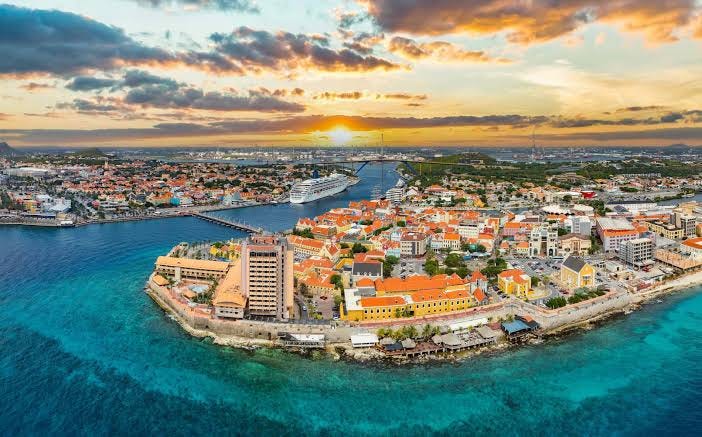
Curacao has quietly become one of the most influential jurisdictions in online gambling. Look at the footers of crypto-focused casinos and sportsbook sites and the name appears again and again: licensed in Curacao. It has become, in effect, a default home for operators seeking fast entry to global markets without the tight regulatory scrutiny required in places like the UK or mainland Europe.
Today there are hundreds of online gambling operators licensed in Curacao with estimates pointing to roughly 450 active operators holding licences and serving international audiences. Some aggregator sites list close to 200 distinct live casino brands tied to Curacao licences alone. Other investigative sources have counted corporate footprints broader than individual brands, suggesting hundreds of corporate licence holders tied to thousands of sites.
This breadth is striking given that Curacao itself has a population of roughly 160,000. What started as a modest regulator for traditional online betting has blossomed into a global iGaming export industry, and is becoming a critical part the of economy of Curacao. When something gets that big, political and regulatory frameworks become a target of powerful businesses.
The growth of online gambling generally (crypto gambling specifically) has been dramatic. According to financial industry data, the global crypto casino sector is projected to generate tens of billions of dollars annually, with some estimates placing the overall market north of $80 billion in gross gaming revenue in 2024 alone. In broader terms, the global online gambling market including fiat and digital tokens was valued in excess of $100 billion in 2025 and continues growing rapidly.

Part of that expansion is driven by the borderless nature of crypto bets, high-frequency wagering, and the appeal of offshore operators that can accept international customers with minimal geographic blockades. Curacao sits at the heart of this trend precisely because its online licence covers casino games, sportsbooks, poker, lotteries and more under a single regime.
Behind the brands themselves lie corporate arrangements that are far more complex. Operators licensed in Curacao frequently use professional services firms to administer governance and compliance roles. Ownership is often held through trusts or trust-linked vehicles, with local corporate directors provided by service providers rather than evident individual principals. Subsidiaries or partner companies may be incorporated in other jurisdictions to handle payment processing or B2B services.
Trusts are a common feature of international business. They are not inherently problematic. But when they are combined with opaque beneficial ownership disclosures, they make it harder for outsiders to determine who truly controls a platform. Professional trustees and nominee directors, commonplace in the Curacao-linked space, can hold shares or directorships for dozens of unrelated operators.
While Curacao’s regulator has AML and UBO requirements on paper, there is limited public evidence of high-profile enforcement actions or published case studies targeting concealed beneficial ownership in the crypto casino sector. That absence of observable oversight, at least from publicly accessible sources, has become a persistent concern among compliance professionals and industry watchers.
Regulators may have internal access to shareholder registers and beneficial ownership declarations. But for the public, civil society, and other regulators, there is a dearth of clearly documented enforcement cases where concealed beneficial ownership was successfully investigated and acted upon in the crypto casino space.
In financial regulation, visible enforcement serves a purpose beyond punishment: it signals seriousness and sets expectations. The relative absence of publicly disclosed UBO enforcement actions in Curaçao, despite the scale of international operations anchored there, leaves a visibility gap at a time when the market’s scale is growing rapidly.
Another dynamic in the offshore iGaming boom has been the rise of political betting markets on crypto sportsbooks. In tightly regulated jurisdictions, political betting is subject to detailed rulebooks and consumer protection standards. In Curacao’s online licensing framework, there is far less widely available guidance specifically addressing political markets. Crypto-oriented platforms licensed there have openly run such markets, often with little public discussion of how regulatory limits apply.
Political wagering adds layers of complexity because it intersects with electoral law, cross-border customer bases, and reputational risk. The lack of clear, published Curaçao guidance on these segments underscores broader questions about how the jurisdiction’s regulations are interpreted and enforced in international contexts.
Cyprus
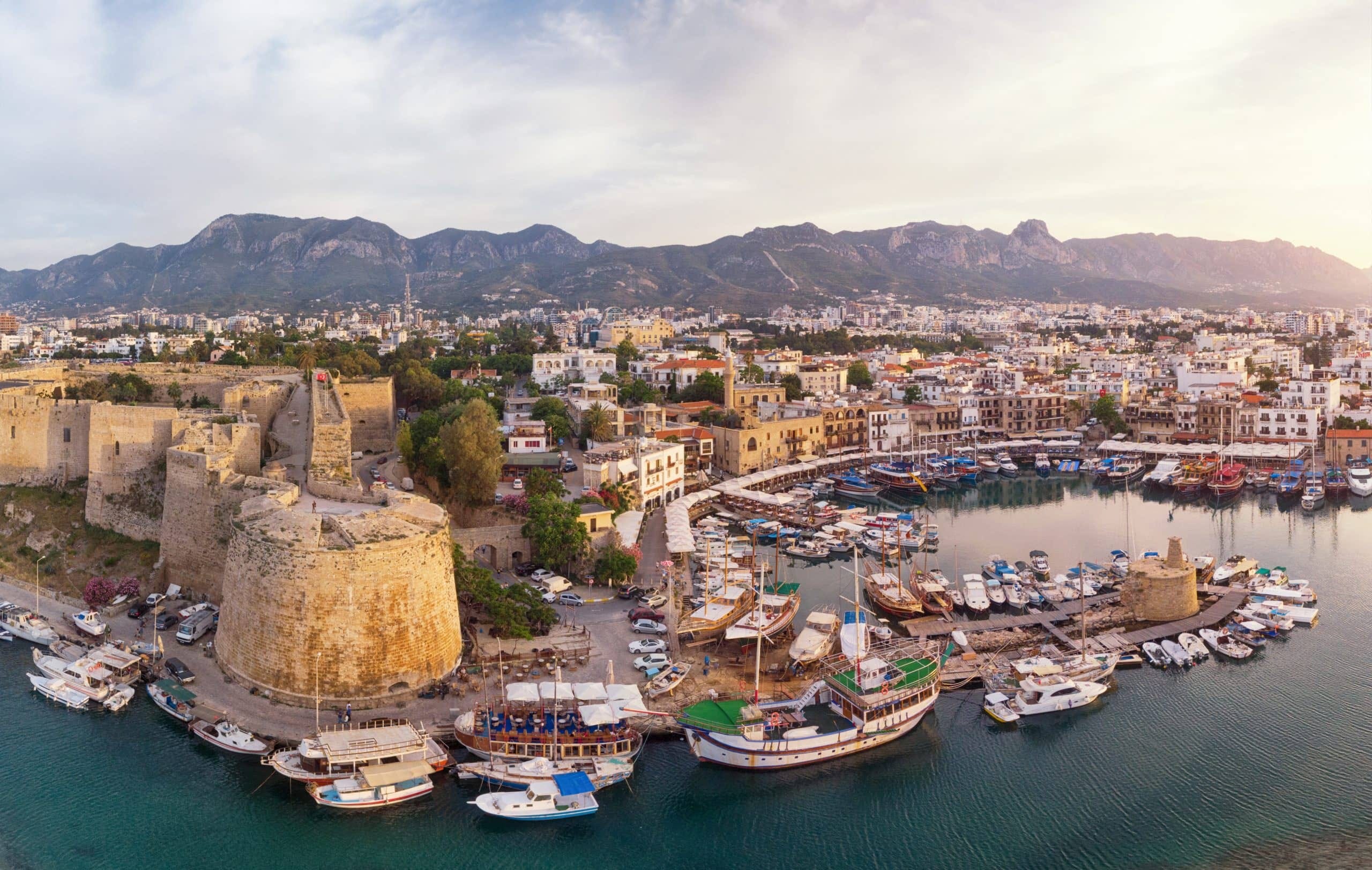
If Curacao has become the licensing engine of the crypto casino boom, Cyprus has increasingly become its European bridge.
Follow the paperwork behind many offshore gambling brands and Cyprus appears with surprising frequency. A technology company here. A marketing contractor there. A payment services arm handling settlements. In some cases, a cluster of related companies registered at the same address, sharing directors or corporate secretaries.
As a member of the European Union, Cyprus operates under EU anti-money laundering directives. On paper, that means strict requirements: beneficial ownership registers, suspicious transaction reporting, politically exposed person screening and enhanced due diligence for high-risk sectors. But compliance frameworks are only as strong as their execution.
For offshore gambling operators, a Cyprus entity offers more than administrative convenience. It provides proximity to the European banking system. A Cyprus company can:
Open accounts within the EU financial network.
Contract with European payment institutions.
Present itself as operating under EU AML standards.
Act as a counterpart to service providers wary of purely offshore structures.
In crypto gambling, where stablecoins and digital wallets dominate the front end, traditional finance often still plays a role behind the scenes. Currency exchange, marketing payments, software licensing fees and operational expenses frequently pass through fiat rails at some stage and Cyprus can serve as that interface.
Professional corporate services firms in Cyprus commonly provide nominee directors and administrative support. This is not unusual. International structuring often relies on such intermediaries.
However, patterns become more sensitive when the same individuals appear across multiple linked gambling entities. If a Cyprus company providing payment or operational services is directed by someone also connected to the Curaçao licence holder, or to the trust structures above it, the separation between governance and oversight can narrow.
AML systems depend on independence. When directors, accountants and compliance providers overlap across jurisdictions, questions naturally arise about who is supervising whom. This is not proof of wrongdoing. It is a governance risk indicator.
EU AML directives require companies in high-risk sectors to conduct enhanced due diligence, identify beneficial owners and report suspicious activity. Where Cyprus entities handle funds or service contracts tied to offshore gambling, those obligations apply.
In theory, large or unusual transactions connected to gambling operations should trigger scrutiny. In practice, the visibility of such enforcement actions is limited.
Public records show enforcement in various sectors of the Cypriot economy over the years. What is harder to identify are detailed case studies linking EU-registered service companies to concealed beneficial ownership structures in offshore crypto gambling. The absence of published examples does not necessarily indicate inaction. But in financial regulation, transparency itself builds confidence.
One particularly sensitive scenario arises when an accountant or corporate services professional based in Curaçao also directs or administers a related entity in Cyprus. If the same individual or network:
Provides governance services to a Curaçao-licensed casino
Oversees or directs a Cyprus payments or services company
Potentially participates in compliance functions
Then independence becomes more than an abstract principle. It becomes a structural question.
The game
This type of structure creates a compliance nightmare, and opens the gates of hell to money-laundering risks.
For instance, what happens when the person who controls the casino is also the one placing the largest bets? In tightly regulated jurisdictions, related-party gambling is heavily scrutinised. Operators are expected to identify conflicts of interest, monitor insider activity and ensure that management or beneficial owners do not exploit their position. But in layered offshore environments, where ownership is routed through trusts and nominee directors, that line can blur.
Using trusts, nominee shareholders and sometimes even offshore holding companies are lawful. But when combined, they can make it difficult for outsiders, and sometimes counterparties, to identify who truly controls the business.
If that individual wished to place significant wagers on the same platform, the question becomes whether internal safeguards would flag that relationship. Without transparent beneficial ownership disclosures and robust internal controls, the risk of undisclosed related-party betting increases.
In such a scenario:
Funds enter the casino as deposits.
Bets are placed on selected markets.
Winnings are paid out.
The funds re-emerge as gambling proceeds.
The legitimacy of those proceeds depends on the independence of the transaction. If the economic risk was genuine and arms-length, the process reflects ordinary gambling activity. If not, the casino risks becoming a conduit for recharacterising funds.
Anti-money laundering frameworks are designed to detect precisely this kind of risk. Enhanced due diligence should apply to:
High-value deposits.
Politically exposed persons.
Complex ownership structures.
Transactions inconsistent with known source of funds.
Effective AML requires independence. The compliance officer must have authority separate from commercial management. Transaction monitoring must not defer to VIP status or internal relationships. If compliance is embedded within the same service network that administers the operator’s corporate structure, that independence can weaken. Whether intentionally or through structural conflict, red flags may be under-escalated. It is a governance vulnerability. What happens when, say, an accountant from Curacao is linked to the trust, the Cyprus entities and even a third-part AML service providers dedicated to online casinos? Marking their own homework is the first thought in my mind.
Missing the political angle, Finance Guy?
Not really. I have come across a couple of examples of high profile people, including aides to senior politicians, who use this kind of structure. Their names are a matter for another time, maybe even authorities. But what has become clear is that there would be benefits for some people if they concealed their relationship with those online casinos - both financially and politically. In the case of crypto casinos, large bets of niche casinos driven by political and sporting events and legitimacy construction/reputation management with extensive use of PR pieces and SEO seeding to influence online searches definitely raise some serious concerns. After all, who knows where the crypto money is coming from, and what it is paying for, if not for the AML officer? Don’t tell it’s the fat cop from the Curacao regulatory office.

Now, maybe breaking the news to authorities in Europe: it’s not just illegal gambling (unauthorised casinos doing retail gambling) that you should be worried about, as there is growing evidence of connections between those casinos and politicians and absolutely extraordinary volumes of suspicious activities.
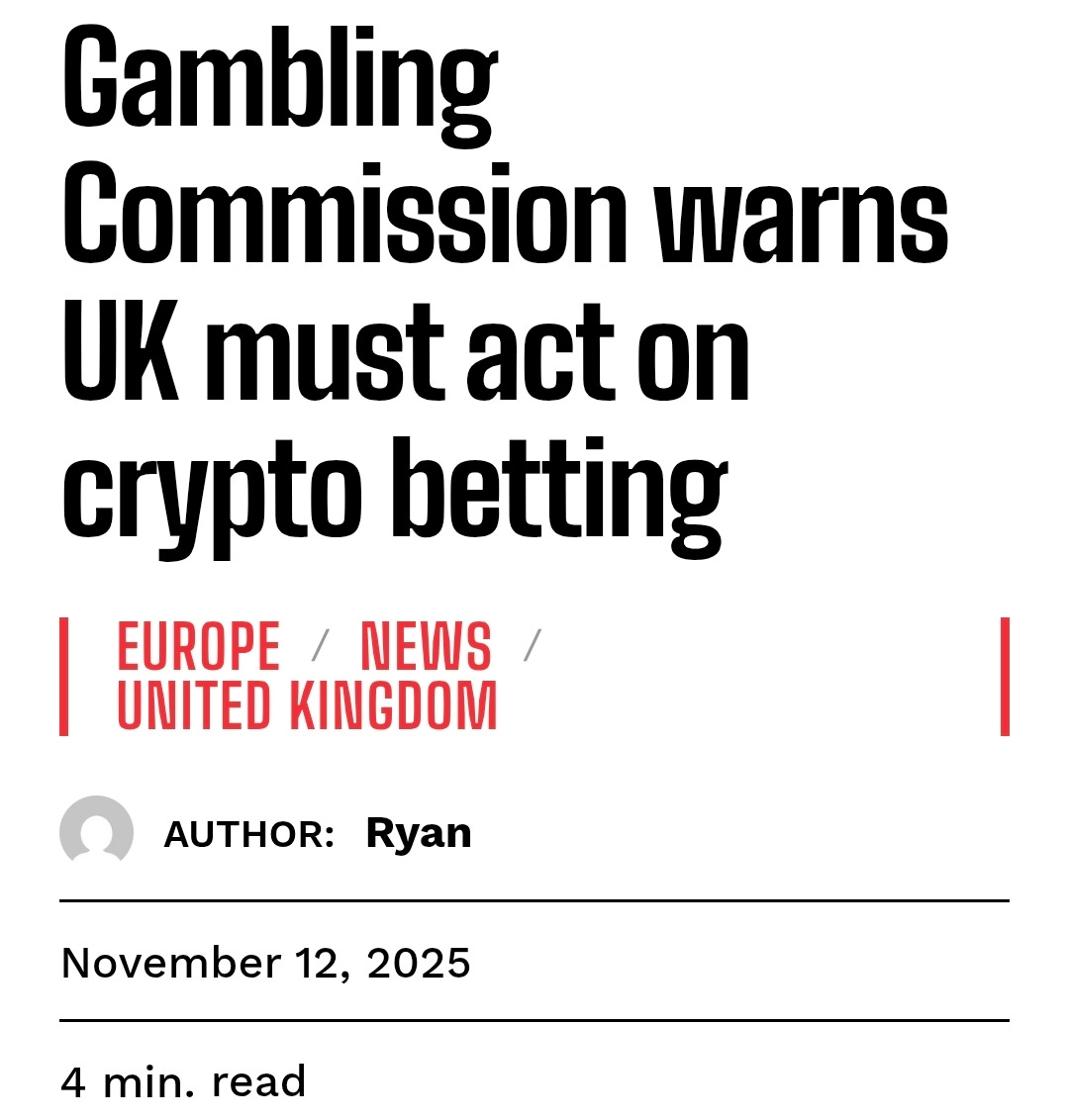
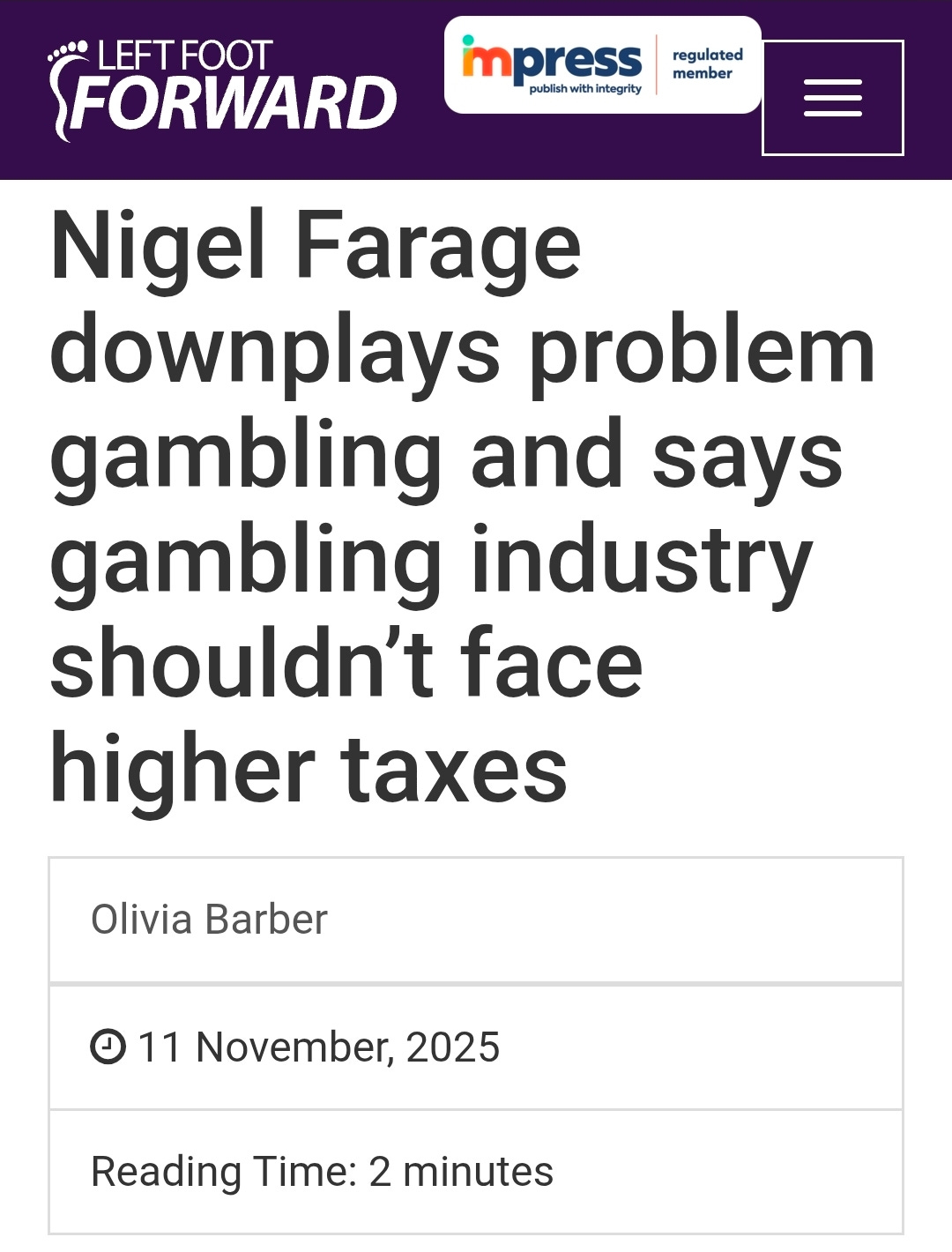
What about Reform UK?
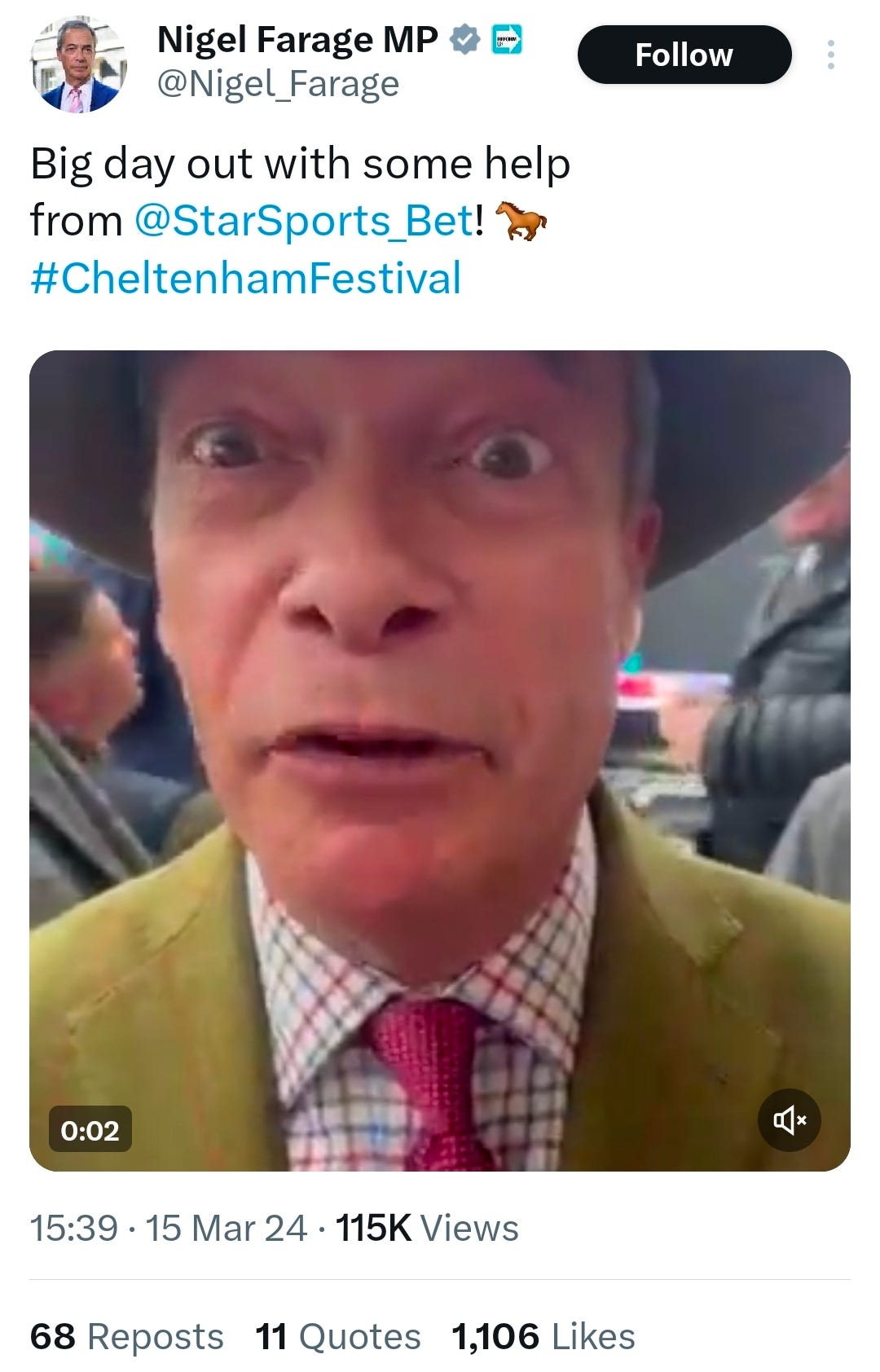
Well, to anyone thinking Nigel Farage was talking about high street betting shops in the post below, I have a bridge to sell you. He’s a proud sponsor of online casinos (although not officially backing any Curacao-based one yet).
A good if complex article - thanks! I love Cyprus. I was born there and had an idyllic childhood for 7 years before being packed off to Boarding school in Sussex. However Cyprus's governments have, since the Turkish invasion of 1974 at least, always been corrupt and have turned a blind eye to successive very financially dodgy groups. The Greek-Cypriots' love of mammon is legendary and i say that as someone with Greek-Cypriot family relations. Look at the way Cyprus embrace Russian oligarchs for example. BTW, the image you use is of Girne, known as Kyrenia before the invasion but your article refers to the recognised government and not the TRNC yes?
The other point to make is that Faage happily accepts crypto donations to Reform from foreigners without bothering to check the source of the money.